Compression Therapy: How It Works and Who It Helps
What pneumatic compression does to your legs, who benefits most, and what a session feels like.
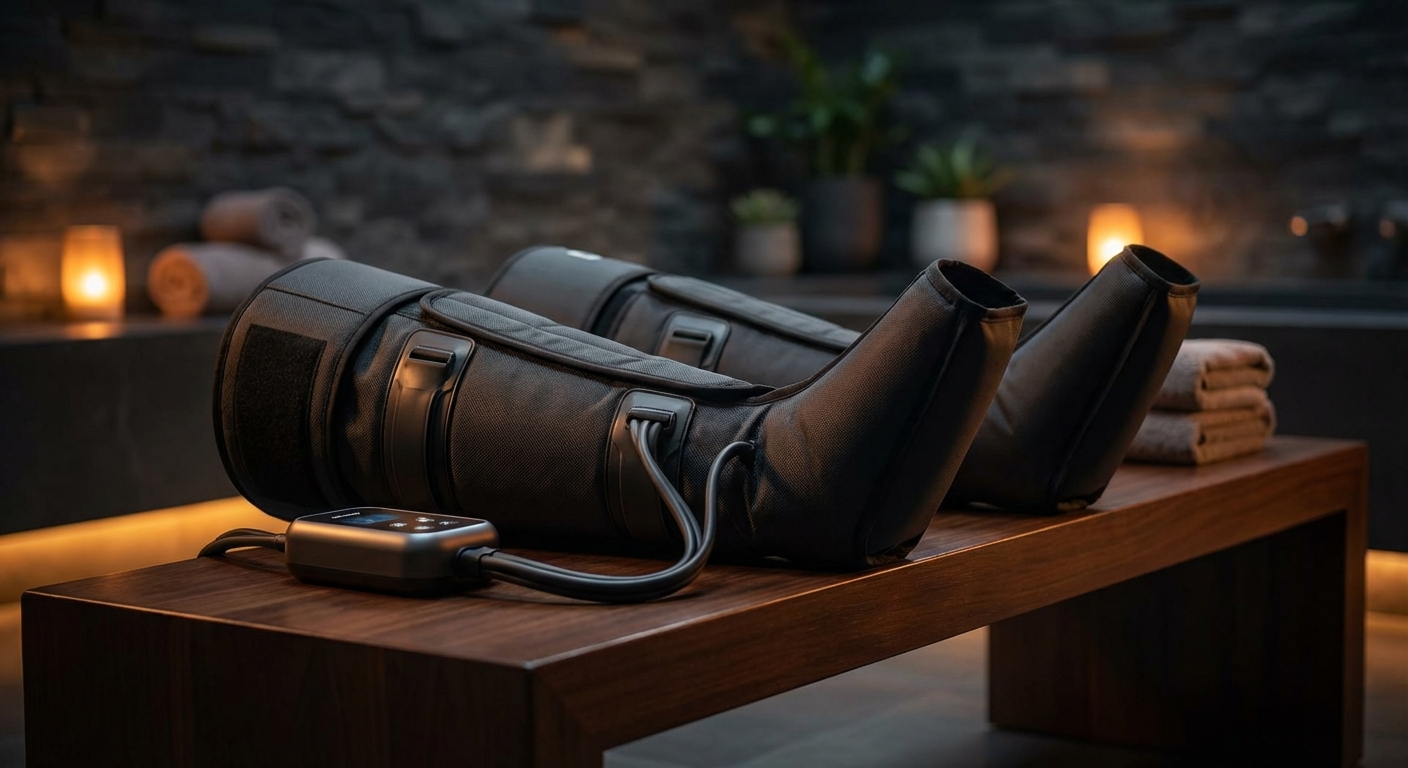
You pull on a pair of inflatable boots, they squeeze from feet to hips in a slow rhythm, and 30 minutes later your legs feel lighter. The mechanism is specific.
What Happens During a Session
The boots wrap your legs from feet to hips. They inflate in sections, starting at your feet and moving upward. Each section holds pressure briefly, then releases as the next one inflates.
That wave moves fluid up your legs. It does what your calf muscles do when you walk, with more force than walking produces.
Sessions run 20 to 30 minutes. Most people read, scroll their phones, or close their eyes.
The Science Behind It
Your lymphatic system has no pump. It depends on muscle contractions to move lymph fluid through your body. When you sit still or recover from hard exercise, that fluid pools in your legs.
The boots push it upward. Your body clears metabolic waste from your muscles and pulls in fresh blood.
Research on pneumatic compression shows:
- Less muscle soreness after exercise
- Reduced swelling in the legs
- Better range of motion
- Faster recovery between training sessions
Who Benefits Most
Athletes and active people. After a hard workout, your muscles hold metabolic byproducts. Compression flushes them faster than rest alone. Most professional teams treat it as standard recovery.
People who sit or stand all day. Office workers, nurses, teachers, anyone whose job locks them in one position accumulates fluid in their legs by end of day. Compression moves it back up.
Travelers. Long flights and drives let fluid settle in your lower legs. A session after travel resets how you feel.
Anyone recovering from an injury. Swelling slows healing. Compression reduces swelling. Physical therapists recommend it for this reason.
What It Feels Like
The pressure is firm and rhythmic. You’ll feel it travel up your legs in waves.
Some people feel lightheaded when they stand up as blood redistributes. That passes in seconds.
Your legs feel lighter when you leave. If you came in sore, you’ll leave less sore.
When to Use It
Compression works well at the start of a recovery session. It gets blood moving before sauna or cold plunge. It also works on its own after a hard leg day.
No real limit on frequency. Some members come daily. Others use it a few times a week during heavy training.
What Compression Doesn’t Do
Compression won’t replace sleep, nutrition, or medical care for an actual injury. It works best alongside those things, not instead of them. It accelerates your body’s natural recovery processes.
Practical Details
Sessions are 20 to 30 minutes. Stay fully clothed, just remove your shoes. We adjust pressure settings, so tell us if it feels too intense or not enough.
Compression pairs well with other modalities. A common sequence: start with compression to get blood moving, then move to sauna or cold plunge. It also works standalone after a workout.
We're a Tampa Bay family passionate about recovery and wellness. We built Rest Recovery to share the modalities that have transformed our own health.
Get More Wellness Tips
Subscribe to get the latest recovery insights delivered to your inbox.
Continue Reading
What a Float Tank Really Does: A Guide to Sensory Deprivation
Floating isn't a fancy bath. Removing every sensory input puts your brain in a state it almost never reaches-here's what's happening, why it's so hard the first time, and what to expect by session three.
Hyperbaric Oxygen for Brain Health and Longevity
Beyond the athlete use case-how hyperbaric oxygen therapy supports neuroplasticity, cognitive function, post-concussion recovery, and the long game of aging well.
Managing Chronic Pain Without Pills: Our Approach
A thoughtful look at how recovery modalities can support chronic pain management - not as a cure, but as part of a comprehensive approach.