Red Light Therapy in Tampa

Service

Red Light Therapy in Tampa

Photobiomodulation and LED light therapy for skin, recovery, and cellular energy

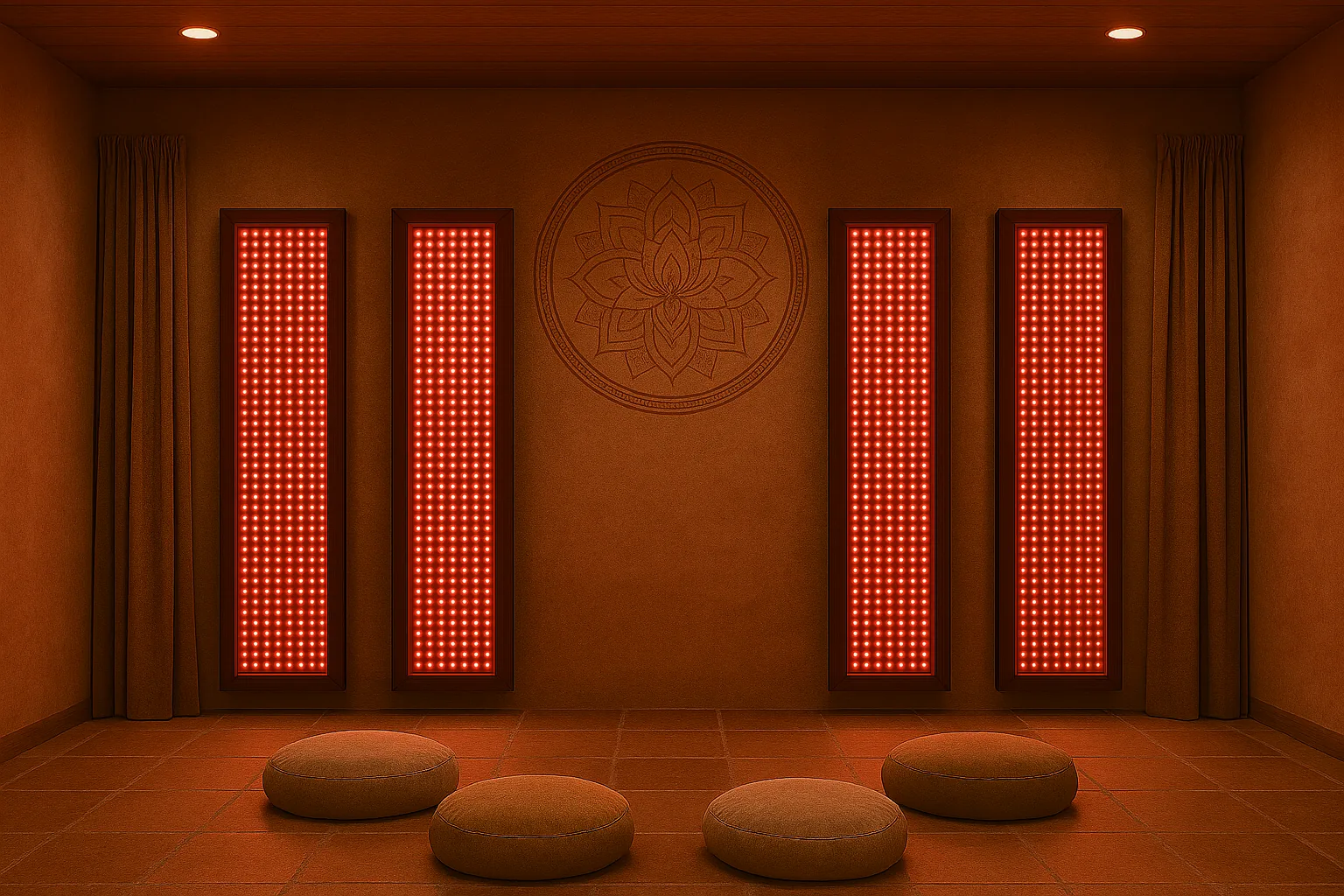
Stand in front of the panels. Red and near-infrared wavelengths reach skin, muscles, and joints. No UV, no heat, no downtime. Ten to fifteen minutes and you're done.

Ideal for: Skin health, post-training recovery, joint comfort, mood, and sleep.

Also known as: photobiomodulation, PBM therapy, low-level light therapy, LLLT, LED light therapy, near-infrared therapy, red light bed, RLT

Serving: South Tampa, Carrollwood, Westchase, Wesley Chapel, Lutz, Land O' Lakes and the greater Tampa Bay area

Why Clients Choose Red Light Therapy

  • Supports collagen production and skin appearance over weeks of consistent use
  • Helps muscles and joints recover faster after intense training
  • Energizes mitochondria-many people notice a lift in mood and afternoon energy
  • Non-invasive and zero downtime-walk in, walk out, return to your day
  • Quick 10-15 minute add-on that stacks with every other modality we offer
  • No UV exposure-safe for daily use, unlike tanning beds

Wavelengths We Use

Our panels emit clinically-studied wavelengths in the visible-red and near-infrared spectrum. Different wavelengths penetrate to different depths and target different tissues.

630nm

Red (surface)

Penetrates 1-2mm

Skin, fine lines, wound support, surface tone

660nm

Red (deep)

Penetrates 5-10mm

Dermis, capillaries, collagen synthesis, scar appearance

850nm

Near-infrared

Penetrates 30-50mm

Muscle, joints, deep tissue, mitochondrial ATP production

Common Use Cases

Skin & Anti-Aging

Most clinical studies on photobiomodulation focus on skin: collagen density, fine lines, tone, and post-procedure recovery. Tampa sun damage is real-RLT is one of the few non-invasive tools with consistent skin-aging research behind it.

Muscle & Joint Recovery

Athletes use 850nm panels post-training to reduce DOMS and support tissue repair. Stacks well with compression and cold plunge in a contrast circuit.

Mood, Sleep & Energy

Morning red light exposure is studied for circadian alignment and mood support. Many clients report sharper afternoons and easier sleep after 2-3 weeks of consistent sessions.

Hair, Scalp & Skin Conditions

Specific 660nm protocols are used clinically for androgenic alopecia and scalp health. Talk to us about positioning if hair is your goal.

Pre-Procedure & Post-Procedure

Used by clients before and after dental, dermatology, or aesthetic procedures to support tissue response. Always coordinate with your provider first.

How a Session Works

Distance
6-12 inches from the panel for full irradiance; further back for whole-body exposure
Session length
10-15 minutes per session is the sweet spot for most goals
Frequency
3-5 sessions per week for skin and recovery; daily morning sessions for mood and circadian support
Timing
Morning sessions support energy and circadian rhythm; evening sessions stack well with sauna for recovery and sleep
Contraindications
Pregnancy, active cancer treatment, photosensitizing medications (some antibiotics, retinoids, accutane), recent steroid injections-check with your provider before starting

Red Light Therapy vs. Other Light-Based Treatments

Modality How it works UV? Best for
Red Light Therapy (PBM) 630-850nm visible/near-infrared light; non-thermal cellular signaling None Skin tone, recovery, mitochondrial energy, mood
LED Tanning Bed UVA/UVB ultraviolet radiation; DNA-damaging tan response Yes (UVA + UVB) Cosmetic tan-not therapeutic
Laser (LLLT) Coherent single-wavelength laser; precise targeting in clinical use None Targeted clinical applications, often handheld in offices
Home Red Light Panel Lower-irradiance LED panels; varies wildly by brand None (typically) Maintenance between professional sessions if irradiance is verified
IPL Photofacial Broad-spectrum intense pulsed light; thermal pigment targeting None Pigmentation, redness, aesthetic clinic procedure

Photobiomodulation for Wesley Chapel and North Tampa

Searching for red light therapy or photobiomodulation in Wesley Chapel, Lutz, or Land O' Lakes? Our north Tampa location is a short drive up the Veterans Expressway-no need to head into the city. Red light is a popular morning add-on before work or a post-school-drop-off reset for parents in the I-75 corridor.

Frequently Asked Questions

What's the difference between red light therapy and photobiomodulation?

They're the same thing-photobiomodulation (PBM) is the clinical term used in research, while red light therapy is the consumer-facing name. PBM is the umbrella that covers visible red (630-660nm) and near-infrared (810-850nm) wavelengths used at non-thermal doses for cellular signaling.

How often should I use red light therapy?

Consistency is key. Most people see best results with 3-5 sessions per week. It's easy to stack with other modalities-sauna, cold plunge, compression-so it fits naturally into your routine. Skin and recovery benefits typically show up after 2-4 weeks of consistent use.

Is it like a tanning bed?

Opposite, actually. Tanning beds use UV radiation, which damages DNA to trigger melanin (a tan). Red light therapy uses 630-850nm visible and near-infrared light-no UV at all-and works through non-thermal cellular signaling. Daily use is fine; daily tanning is not.

What's the difference between red and near-infrared (850nm)?

Red light (630nm, 660nm) penetrates a few millimeters-it's the wavelength for skin, fine lines, and tone. Near-infrared (850nm) penetrates 30-50mm and reaches muscles, joints, and deep tissue. Our panels deliver both so you don't have to choose.

Will I feel anything during the session?

You might feel a gentle warmth, but it's not hot. Most people find it relaxing. You stand or recline, eyes closed, and let the light work for 10-15 minutes.

How long until I see results?

Some people notice energy and mood improvements within a few sessions. Skin and recovery benefits typically show up after 2-4 weeks of consistent 3-5x weekly use. Joint and chronic discomfort tends to respond over 4-8 weeks.

Can I do red light if I'm on retinoids or accutane?

Photosensitizing medications can change how your skin responds to light. Topical retinoids, oral isotretinoin (accutane), some antibiotics, and certain herbs (St. John's Wort) all warrant a conversation with your prescribing provider first. We'll review your medication list at intake.

Is it safe during pregnancy or breastfeeding?

There isn't enough research to say definitively. Most clinics-including ours-default to caution and ask pregnant clients to skip RLT until after delivery. Talk to your OB if you're unsure.

How is this different from a red light panel I bought online?

Two things matter: irradiance and time. Professional panels deliver 100+ mW/cm² at the recommended distance, which is what most published research uses. Home panels vary wildly-some are excellent, some are barely effective. Use ours for the dose, supplement with home panels if you want maintenance.

Related Articles

Research & References