The Science Behind Red Light Therapy
How red and near-infrared light work at the cellular level to reduce inflammation, speed recovery, and improve skin health.
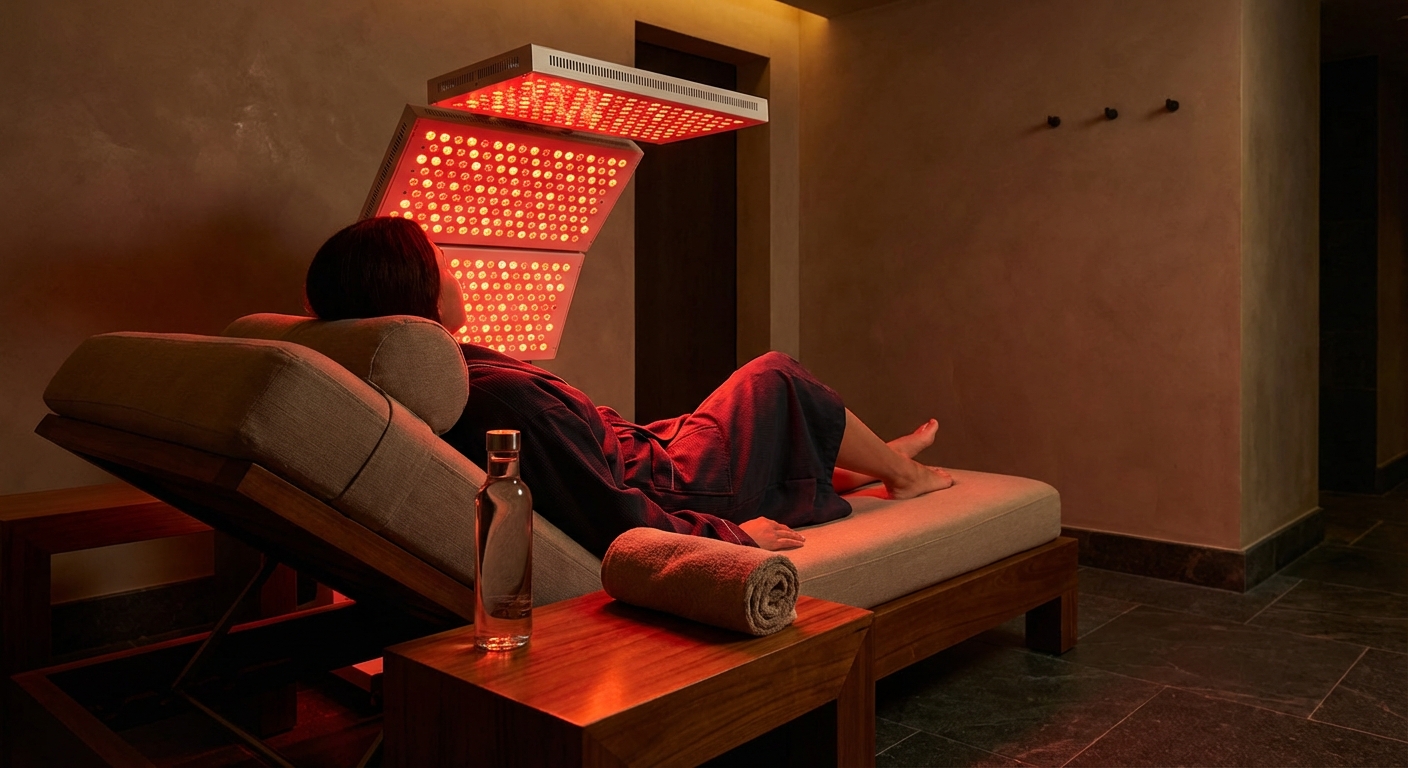
Your mitochondria contain an enzyme, cytochrome c oxidase, that absorbs red and near-infrared light. When red light therapy hits your cells, mitochondria produce more ATP. More ATP means faster tissue repair and lower inflammation. That’s the mechanism.
What’s Actually Happening
Mitochondria are the energy-producing structures in every cell. Cytochrome c oxidase acts as a photoreceptor for specific wavelengths in the red and near-infrared spectrum. When you expose it to those wavelengths, mitochondrial output increases and your cells have more fuel for repair.
This is why the effects extend well beyond skin: energy availability determines how fast muscle repairs, how quickly inflammation resolves, how well tissue heals.
Red vs Near-Infrared
Our panels emit both wavelengths.
Red light (630-660nm) works at the skin’s surface. It stimulates collagen production, speeds wound healing, and improves skin tone.
Near-infrared light (810-850nm) penetrates deeper, reaching muscle, joint, and bone tissue. Athletes use it to cut recovery time and reduce joint pain.
Every session delivers both.
What the Research Shows
NASA studied red light for wound healing in space. Since then, photobiomodulation research has produced consistent findings across multiple applications:
- Reduced muscle soreness after exercise
- Faster healing of soft tissue injuries
- Lower inflammatory markers
- Improved skin texture and collagen density
- Better sleep quality when used in the evening
Professional sports teams, physical therapists, and dermatologists now use it as standard practice. The mechanism is well characterized in the literature.
For Tampa Skin
Florida sun degrades collagen and accelerates skin aging. Red light does the opposite: it stimulates collagen synthesis and supports cellular repair. Regular sessions help offset cumulative UV damage, which is relevant year-round here.
How Sessions Work
Most members stack red light after sauna and cold plunge, when circulation is already elevated. Sessions run 10-20 minutes. Stand or sit in front of the panels. No prep, nothing to bring.
If you want to read the mechanism research, this NIH review covers it in depth. Most people skip the paper and just try a session.
We're a Tampa Bay family passionate about recovery and wellness. We built Rest Recovery to share the modalities that have transformed our own health.
Get More Wellness Tips
Subscribe to get the latest recovery insights delivered to your inbox.
Continue Reading
Hyperbaric Oxygen for Brain Health and Longevity
Beyond the athlete use case-how hyperbaric oxygen therapy supports neuroplasticity, cognitive function, post-concussion recovery, and the long game of aging well.
Recovering from Travel: Our Go-To Protocol
How to bounce back from travel fatigue using targeted recovery modalities-what works, in what order, and why.
Recovery for CrossFit: What Actually Helps
A practical guide to recovery modalities for CrossFit athletes-what works, when to use it, and how to fit it into your training schedule.