Recovery for Remote Workers: Combat Screen Fatigue
Working from home takes a toll on your body and mind. Here's how to recover from desk-bound days and reclaim your energy.
Your commute is gone, but your neck isn’t grateful. Sitting in the same chair, same posture, same screen for eight hours does real physical damage — and most remote workers have normalized it.
What’s Happening to Your Body
Forward head posture. Your head weighs about 10 pounds. For every inch it shifts toward your screen, your neck muscles absorb an extra 10 pounds of load. Most desk workers carry 30-40 pounds of effective head weight by end of day.
Hip flexor tightness. Sitting shortens these muscles. Over time they pull on your lower back, creating the chronic ache that no amount of stretching fully resolves.
Thoracic spine stiffness. That rounded upper back locks up the joints. Your ribcage stops expanding fully. Your breathing gets shallower without you noticing.
Sluggish circulation. Movement drives blood flow. Without it, metabolic waste builds up in tissue. You feel foggy because your blood isn’t moving.
What’s Happening to Your Mind
Video calls exhaust you in ways in-person meetings don’t. You’re parsing faces on a flat screen, managing your own image, and compensating for audio delays — cognitive work that happens below the level of conscious attention.
When your office is your home, your nervous system never fully powers down. The boundary between “work mode” and “rest mode” blurs. Notifications and Slack messages pull at you all day. By evening you’re wired and depleted at the same time.
The Reset Stack
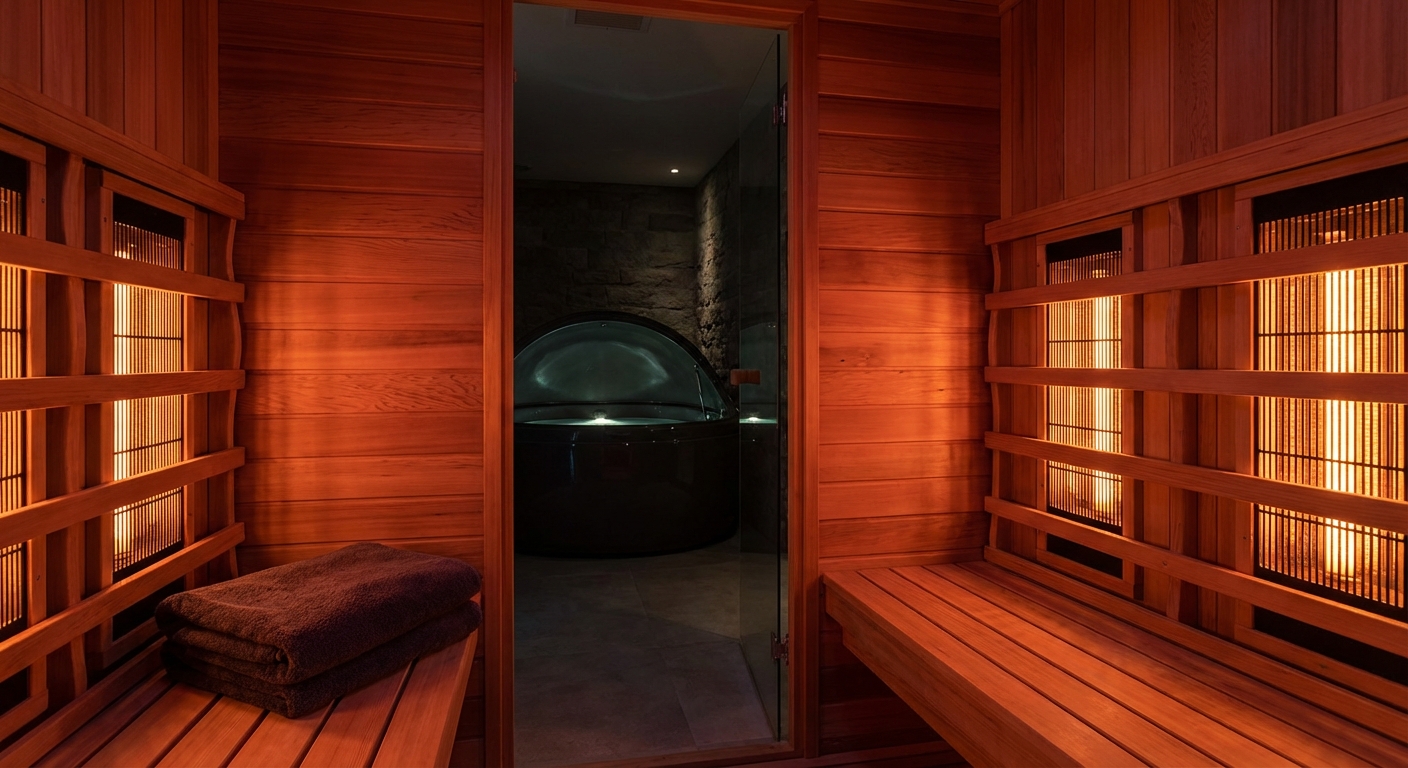
Infrared sauna — 20 to 30 minutes
Deep heat does what stretching can’t. It penetrates tissue, loosens joints, and brings blood flow to the areas that have been compressed and static all day. Your hip flexors release. Your shoulders drop. The heat also activates your parasympathetic nervous system — the shift out of work mode that screens actively suppress.
Float therapy — 60 minutes
No screens. No notifications. No gravity compressing your spine. Your nervous system gets a complete input break, and your spine decompresses in a way that even a full night’s sleep doesn’t match.
Remote workers consistently tell us the float is the first time all week they feel genuinely off from work.
Contrast therapy
If floating isn’t your preference, the infrared and cold plunge rotation works through a different mechanism — controlled thermal stress that resets your nervous system rather than quieting it. Both produce the same outcome.
Building a Weekly Rhythm
Add recovery to your calendar like a recurring meeting:
Minimum: One 90-minute session per week — float plus infrared, or the Reset Circuit. Block it and don’t move it.
Better: Two sessions. One midweek, one at the end of the week to fully process and reset.
Daily habits that support the sessions:
- Stand every 45 minutes
- Walk during phone calls
- End your workday with a physical transition — change clothes, go outside, do something with your body
The weekly sessions handle the deep recovery your body can’t do on its own. The daily habits maintain what the sessions build.
The Cumulative Effect
One session leaves you feeling better. Three or four weeks of consistent sessions change how you carry yourself at work. The neck tension fades. The afternoon fog clears. You stop arriving at dinner exhausted.
Once you feel that baseline, skipping sessions registers the same way skipping sleep does.
Come in and tell us you work from home. We’ll build a recovery rhythm around your schedule and the specific things desk life is doing to your body.
We're a Tampa Bay family passionate about recovery and wellness. We built Rest Recovery to share the modalities that have transformed our own health.
Get More Wellness Tips
Subscribe to get the latest recovery insights delivered to your inbox.
Continue Reading
Hyperbaric Oxygen for Brain Health and Longevity
Beyond the athlete use case-how hyperbaric oxygen therapy supports neuroplasticity, cognitive function, post-concussion recovery, and the long game of aging well.
Salt Therapy: 5 Reasons Tampa Families Love It
Salt therapy isn't just for allergy season. Here's why it's becoming a year-round favorite for Tampa families.
Recovering from Travel: Our Go-To Protocol
How to bounce back from travel fatigue using targeted recovery modalities-what works, in what order, and why.