Infrared Sauna: The Recovery Tool You're Underestimating
Infrared saunas heat tissue directly, not just air. How that difference drives recovery, sleep quality, and chronic pain relief.
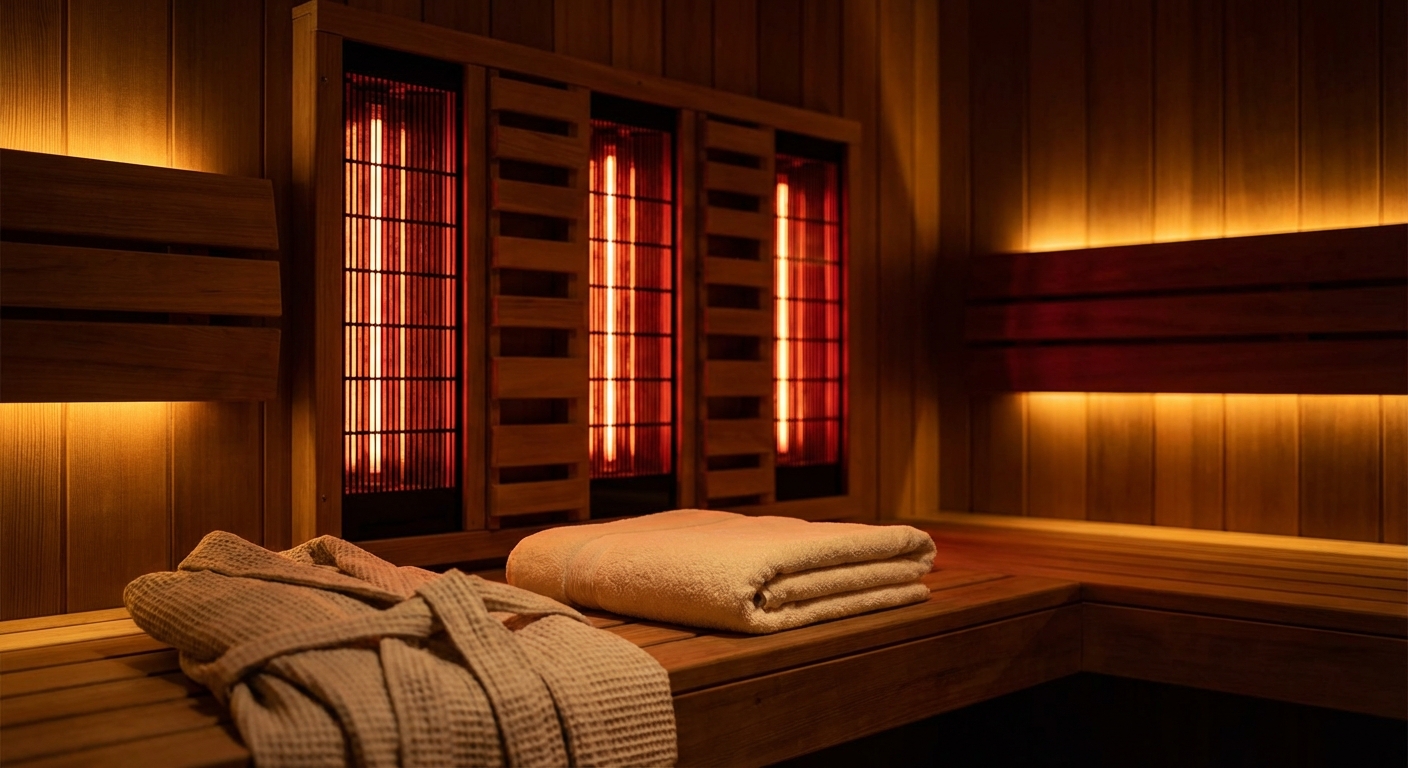
Walk into a traditional sauna and you’re sitting in 180-200°F air. Walk into an infrared sauna and the air reads around 130°F. Both leave you sweating. The similarity ends there.
Radiant Heat vs. Ambient Heat
Traditional saunas heat the air around you, which heats your skin, which eventually heats your body. The chain works, but it requires extreme temperatures to move heat deep into tissue.
Infrared saunas emit light in the infrared spectrum, the same heat you feel from sunlight without UV. This light penetrates skin and heats tissue directly. You sweat at 50-70°F lower ambient temperatures, stay comfortable for a full session, and the heat reaches deeper than surface warmth.
What’s Actually Happening
When infrared light penetrates tissue, four things happen:
Core temperature rises. Your body responds as it would to a mild fever: triggering immune response and releasing heat shock proteins, which help repair damaged cells.
Blood vessels dilate. More blood flow delivers oxygen to tissue and clears metabolic waste.
Sweat glands activate. Research shows infrared sweat contains higher concentrations of heavy metals and environmental toxins than exercise sweat. Your body clears things it can’t clear through movement alone.
Heart rate climbs. A 30-minute session produces cardiovascular load comparable to moderate exercise, without putting stress on joints.
The Benefits We See
Muscle recovery. Increased blood flow clears lactic acid and other metabolic byproducts between training sessions. Athletes who use infrared between sessions recover faster than those relying on rest alone.
Joint relief. Deep heat loosens stiff joints and tight muscles without requiring movement. Members managing chronic pain use this weekly.
Sleep quality. Your core temperature drops after you leave the sauna. That drop signals melatonin release. Evening sessions help you fall asleep faster and stay asleep longer.
Skin clarity. Better circulation and deeper sweating clears pores. Regular sessions improve tone and texture in ways topical products don’t reach.
Stress adaptation. Controlled heat exposure trains your nervous system to regulate under stress. The discomfort of the session is the stimulus; the calm after is the adaptation.
How We Use It
Infrared shows up in all three signature protocols at Rest:
Reset Circuit: Paired with cold plunge for contrast therapy. Alternating heat and cold drives the vascular response that makes both more effective.
Deep Recovery: Used after PEMF and hyperbaric to help the body integrate cellular work already in progress.
Nervous System Drop: The final step after floating and salt therapy. Heat holds the parasympathetic state you’ve built through the session.
As a standalone, 30-40 minutes is a complete session.
Common Questions
How hot does it get? Our saunas run 125-150°F. Comfortable enough to hold a full session, where traditional saunas push you out early.
How long should I stay? Start at 20 minutes. Work toward 40 as you adapt.
Can I use it every day? Yes. Many members use it daily. If you leave feeling depleted rather than loose, take a rest day.
Should I drink water? Yes, and more than you think. Hydrate before you go in, keep water with you inside, and drink again after.
Infrared works as a standalone or as the heat component in a contrast session. Book a session and see which one fits your schedule.
We're a Tampa Bay family passionate about recovery and wellness. We built Rest Recovery to share the modalities that have transformed our own health.
Get More Wellness Tips
Subscribe to get the latest recovery insights delivered to your inbox.
Continue Reading
Hyperbaric Oxygen for Brain Health and Longevity
Beyond the athlete use case-how hyperbaric oxygen therapy supports neuroplasticity, cognitive function, post-concussion recovery, and the long game of aging well.
Recovering from Travel: Our Go-To Protocol
How to bounce back from travel fatigue using targeted recovery modalities-what works, in what order, and why.
Recovery for CrossFit: What Actually Helps
A practical guide to recovery modalities for CrossFit athletes-what works, when to use it, and how to fit it into your training schedule.