The Contrast Stack: Why Recovery Sauna + Cold Plunge Beat Either Alone
Heat alone helps. Cold alone helps. Cycling between them does something neither can do solo-and it's the foundation of how we build resilience.
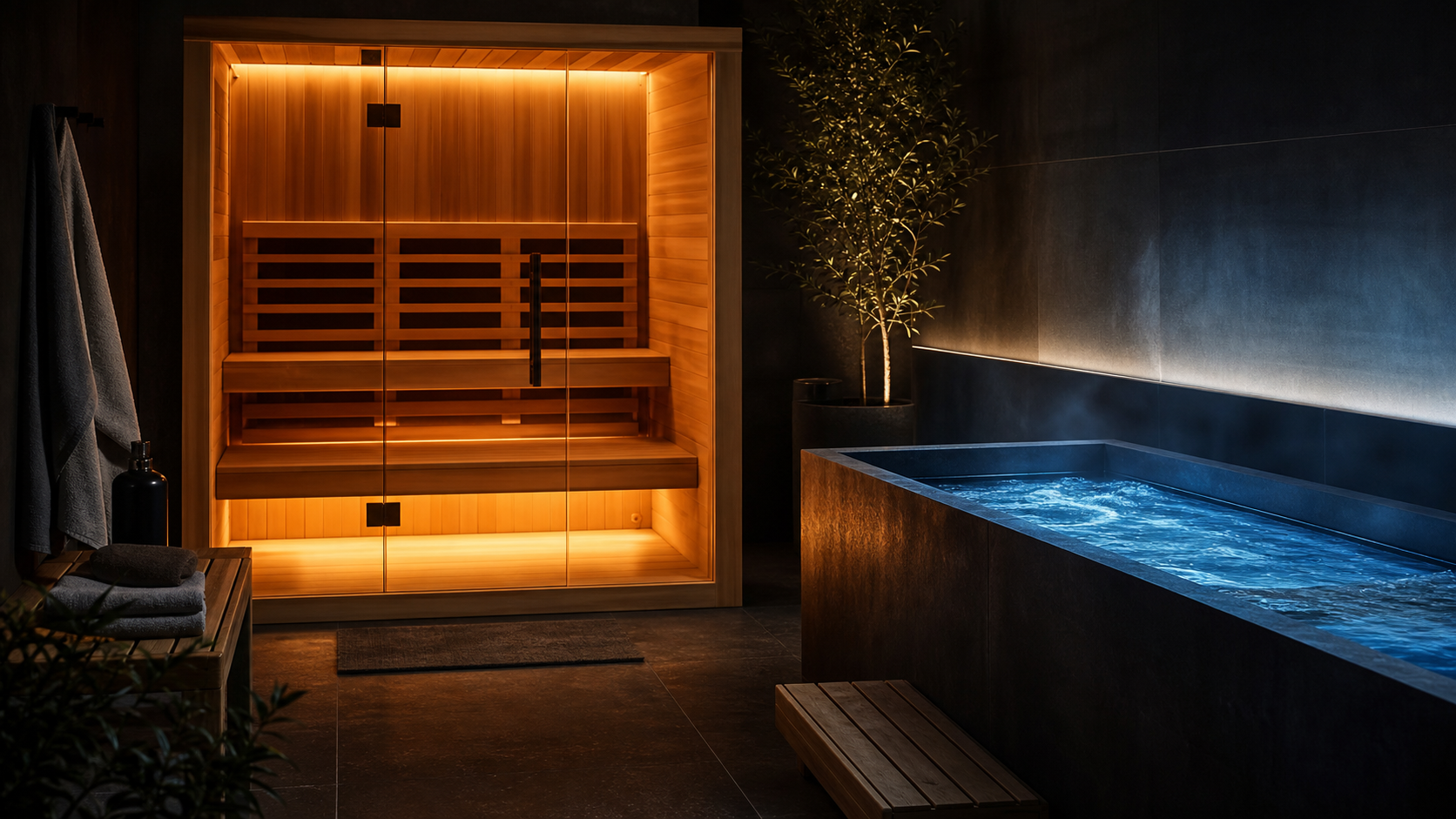
Book the sauna and the cold plunge together. Heat first, cold second, repeat. The contrast cycle produces adaptations that neither session creates alone.
We covered why contrast works when we opened. This goes deeper: what’s happening in your body during each round, why the sequence matters, and the protocol we run at Rest.
What Each Side Does Alone
Infrared sauna raises your core temperature, dilates blood vessels, releases heat shock proteins, and shifts your body toward parasympathetic recovery. Members use it for muscle tension, sleep, and just feeling melted.
Cold plunge constricts vessels, spikes norepinephrine, drives down inflammation, and sharpens focus for hours after. Members use it for energy, mood, and post-workout recovery.
Both work. Your body adapts to a single stress over time, though. Alternate the stresses and the adaptation curve stays steep.
What Contrast Does Together
When you cycle between heat and cold, your circulatory system runs its own workout. Vessels dilate in the sauna, constrict in the plunge, dilate again. Physiologists call this vascular gymnastics, and it drives several things at once.
Blood reaches tissue it normally skips. Connective tissue, joints, and dormant capillaries get a flush that neither normal activity nor single-modality sessions produce.
Metabolic waste clears faster. Lactic acid and inflammatory byproducts move out through circulation amplified by repeated dilation cycles.
Catecholamine release runs higher than either session alone. Cold spikes norepinephrine and dopamine; heat lets the system recover; the next cold round hits a reset baseline and spikes again.
Your nervous system learns to switch states. You likely stay locked in stress for hours and take a long time to drop into rest. Contrast sessions train your body to flip between sympathetic and parasympathetic activation faster, and the shift compounds with regular practice.
After a few cycles, most members describe contrast sessions as a different category from either alone. That’s the cumulative cardiovascular and neurological adaptation.
The Order: Hot First, Then Cold
Start hot. Muscles are pliable, circulation is up, your body is open.
Cold second is where most of the benefit concentrates. The shock against a heated body is more dramatic, catecholamine release runs higher, and you finish with the sharp, grounded feeling contrast is known for.
Two or three full cycles is where most members get the full-body shift. Some do five. Past that, returns diminish.
Finish on cold to leave alert. Finish on hot to wind down for sleep.
How We Build the Stack
Our Reset Circuit is the protocol version of this:
Compression (15 min): Prime circulation before the contrast work starts.
Sauna (15 min) → Cold plunge (3 min) → Sauna (10 min) → Cold plunge (3 min): Two full contrast cycles.
Red light therapy (15 min): Cellular recovery while your core temperature returns to baseline.
Plan on about 90 minutes, including transitions. Most members run this once or twice a week.
You don’t need the full protocol to get the contrast benefit. Twenty minutes in the sauna, three minutes in the plunge, repeat once. That covers the core mechanism.
Tampa-Specific Notes
Florida ambient heat does not substitute for therapeutic heat. The question comes up sometimes: “I sweat all day at work, do I really need sauna?”
Yes. Different mechanism. Outdoor Tampa heat is humid, uncontrolled, and something your body fights. Infrared sauna delivers dry, penetrating heat that triggers heat shock proteins, a parasympathetic shift, and cardiovascular load similar to moderate exercise. Sweating in a parking lot doesn’t do any of that.
Cold plunge matters more in Florida than in most places. Ambient temperature stresses your system most of the year. Cold exposure is the counterweight your body almost never gets here unless you create it.
Common Questions
How cold is the cold plunge? 48°F. Cold enough to drive the adaptation, accessible enough to breathe through.
How long do I need to stay in? Two to three minutes per round. Relaxed breathing through the cold is the actual practice. Don’t grind through agony.
Can I do one cycle if I’m short on time? One sauna plus one plunge beats either alone. Two full cycles is where the full-body shift reliably shows up.
Pre-workout or post-workout? Post. Cold exposure before training blunts some training adaptations. After is when contrast does its best work.
How often? Two to four times a week is what we see in members who report feeling best.
Book a session, or try the Reset Circuit to run the full protocol.
We're a Tampa Bay family passionate about recovery and wellness. We built Rest Recovery to share the modalities that have transformed our own health.
Lock in founding pricing before we open
Founding members lock in $129/month for life, $20 off the public rate, with a $1 refundable hold. Rest Recovery is opening soon in Tampa.
See Founding PlansGet More Wellness Tips
Subscribe to get the latest recovery insights delivered to your inbox.
Continue Reading
What a Float Tank Really Does: A Guide to Sensory Deprivation
Floating isn't a fancy bath. Removing every sensory input puts your brain in a state it almost never reaches-here's what's happening, why it's so hard the first time, and what to expect by session three.
Hyperbaric Oxygen for Brain Health and Longevity
Beyond the athlete use case-how hyperbaric oxygen therapy supports neuroplasticity, cognitive function, post-concussion recovery, and the long game of aging well.
Recovery for Active Seniors: Stay Sharp, Mobile, and Pain-Free
How adults 55+ are using recovery science to maintain mobility, manage pain naturally, and feel better than they have in years.